
The Cholesterol Code: An AKT Team Review
When Clinical Experience and Scientific Curiosity Collide
As ketogenic dietitians, we've had countless conversations about cholesterol, particularly when LDL cholesterol rises despite improvements in other markers of metabolic health. The documentary The Cholesterol Code explores one of the most debated questions in ketogenic medicine:
What does it actually mean when LDL cholesterol rises on a ketogenic diet?
Throughout the film, patient stories span type 1 diabetes, neurological conditions, eating disorders, metabolic disease, and mental health disorders. While their diagnoses differ, many describe similar outcomes after implementing ketogenic metabolic therapy:
Improved metabolic health
Better symptom control
Improved energy and cognition
Reduced medication burden
Better quality of life
Yet alongside those improvements, some also experience significant increases in LDL cholesterol.
For the AKT team, this is where the conversation becomes most interesting. Not whether LDL matters, but whether it tells the whole story.
The Cholesterol Question
For decades, elevated LDL cholesterol has been viewed as a major driver of cardiovascular disease, leading many clinicians to assume ketogenic diets inherently increase cardiovascular risk.
The Cholesterol Code challenges that assumption by asking whether LDL cholesterol should always be interpreted the same way in individuals who are lean, metabolically healthy, and in nutritional ketosis.
Most cholesterol research has focused on populations with obesity, insulin resistance, type 2 diabetes, or poor metabolic health. The documentary asks whether the same conclusions necessarily apply to individuals whose metabolic profile looks very different.
Dave Feldman and the Origins of Lean Mass Hyper-Responders
The film centers around Dave Feldman, a software engineer whose own experience sparked years of self-experimentation and research.
After adopting a ketogenic diet, Feldman experienced dramatic improvements in his metabolic health including better glucose control, weight loss, and improved sleep and energy.
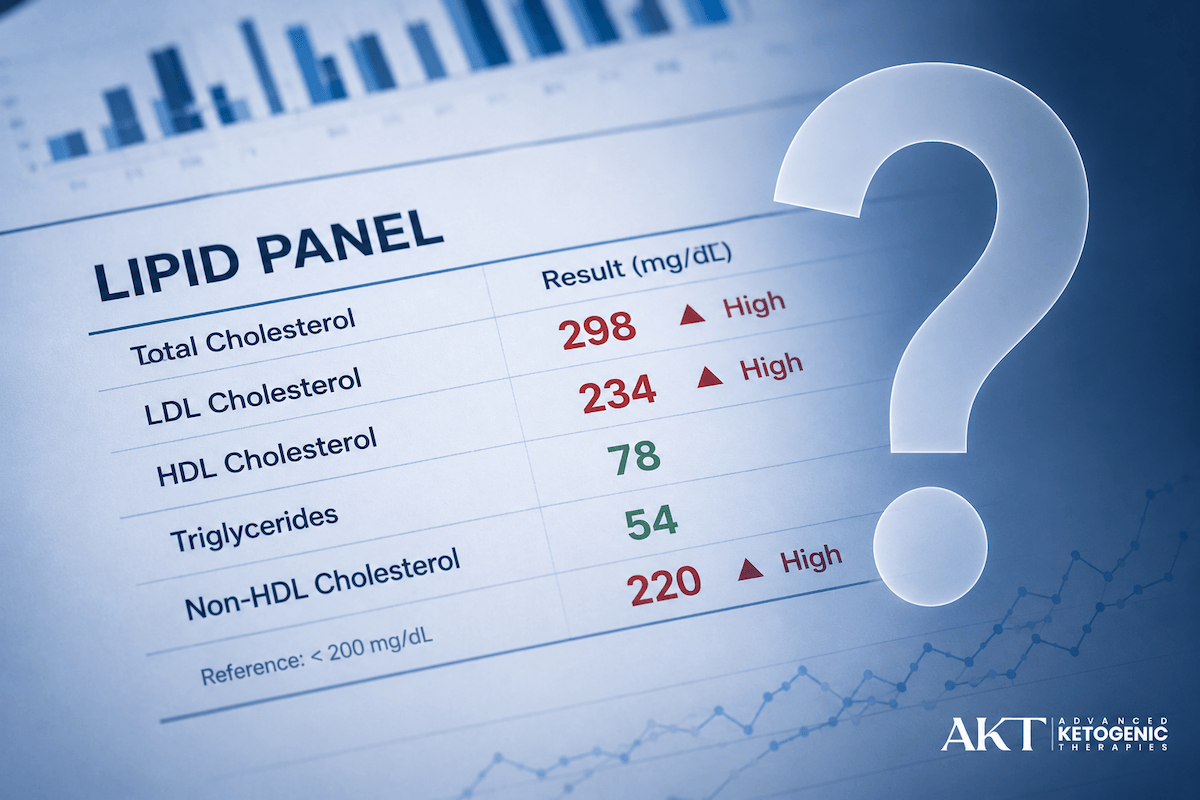
But his LDL cholesterol skyrocketed.
Assuming something was wrong, he repeated labs, sought additional opinions, and began studying cholesterol metabolism in depth. He had been told saturated fat was the primary driver of elevated LDL cholesterol, so he reduced saturated fat intake expecting improvement.
Instead, his LDL increased even further.
Rather than abandoning the diet, Feldman became determined to understand what was happening. He meticulously tracked food intake, weight, bloodwork, and lipid patterns while performing repeated self-experiments.
Over time, he noticed something unexpected, when he ate less food and less fat, his LDL often increased. When he ate more food, his LDL sometimes dropped significantly.
The pattern challenged conventional assumptions about cholesterol metabolism.
Feldman eventually began presenting his findings at low-carbohydrate conferences and on podcasts. While many experts were initially skeptical, his data attracted growing attention from clinicians, researchers, and individuals experiencing similar patterns.
Eventually, a new phenotype emerged known as the Lean Mass Hyper-Responder (LMHR).
This term describes individuals who develop:
Very high LDL cholesterol
High HDL cholesterol
Very low triglycerides
Excellent metabolic health
…while following a ketogenic diet.
Importantly, these individuals are often lean, physically active, and otherwise metabolically healthy.
The Lipid Energy Model
To explain this phenomenon, the documentary introduces the “Lipid Energy Model.”
The concept is relatively straightforward. When carbohydrate intake is low, insulin levels fall and the body shifts toward relying more heavily on fat for fuel. But fat cannot move freely through the bloodstream on its own. It requires transport particles called lipoproteins.
One of those particles is LDL.
The theory proposes that in individuals who are highly dependent on fat metabolism, particularly lean individuals with low energy reserves, the body increases lipid trafficking to meet energy demands.
In simple terms, more fat mobilization leads to more lipid transport via lipoproteins which leads to higher circulating LDL cholesterol.
The documentary emphasizes that this remains a theory rather than proven fact. But it offers a possible explanation for why some individuals experience dramatic LDL elevations while others do not.
The film also notes that many earlier ketogenic diet studies primarily involved individuals with obesity and metabolic disease. As ketogenic therapy expands more lean individuals are adopting these diets and more lean mass hyper-responders are being identified.
AKT Dietitian Emily Samuels, MS, RDN, CSP, LD noted that this pattern is something many ketogenic clinicians have observed in practice. "We often see cholesterol markers improve during active weight loss. Sometimes it's after weight stabilizes and individuals become leaner that LDL begins to increase, which can make these conversations more complex."
Importantly, the film does not suggest that elevated LDL should be ignored. Rather, it highlights how much remains unknown about cholesterol metabolism in lean, metabolically healthy individuals who rely heavily on fat as a primary fuel source.
One of the most important themes throughout the documentary is the idea that LDL cholesterol may not tell the entire cardiovascular story.
The film spends significant time discussing coronary artery calcium (CAC) scoring and coronary CT angiography (CTA), imaging techniques that directly visualize plaque within coronary arteries.
Rather than relying solely on laboratory markers, these scans allow clinicians to look directly at the arteries themselves.
This led to one of the documentary’s central research questions:
If lean mass hyper-responders are at elevated cardiovascular risk, should they already demonstrate significant plaque burden?
To investigate this, Feldman and collaborators crowdfunded a study involving 100 lean mass hyper-responders who underwent coronary imaging.
The early results surprised many researchers.
Despite LDL cholesterol levels ranging from the low 200s to nearly 600 mg/dL:
More than half of participants had no detectable plaque
Most showed either no or minimal atherosclerosis
Many had maintained ketogenic diets for years with persistently elevated LDL cholesterol
One aspect of the film that particularly resonated with the AKT team was its emphasis on direct measurement rather than assumption.
"The documentary did a nice job presenting multiple perspectives," shared Emily. "It wasn't anti-statin and it wasn't anti-cardiology. The message was really that we shouldn't ignore LDL, but we also shouldn't stop there. Looking at imaging, plaque burden, and the overall clinical picture provides a much more complete assessment of risk."
Denise Potter, RDN, founder of Advanced Ketogenic Therapies, also appreciated the film's balanced approach.
"Every word seemed intentionally chosen. The researchers repeatedly emphasized that they were following the science wherever it leads. Even when results were surprising, they acknowledged the unanswered questions and the need for additional research."
The documentary does not frame these findings as proof that elevated LDL is harmless. Instead, the film presents them as evidence that the relationship between LDL cholesterol and cardiovascular disease may be more complex in metabolically healthy ketogenic individuals than previously assumed.
Follow-up imaging results presented later in the documentary remained similarly surprising. Most but not all participants showed little to no plaque progression over the study period, and LDL levels themselves did not clearly correlate with plaque burden within the lean mass hyper-responder group.
Again, the film does not claim the science is settled. Rather, it argues these findings justify further investigation rather than blanket assumptions.
Final Thoughts
Ultimately, The Cholesterol Code is not arguing that LDL cholesterol is irrelevant or that ketogenic diets are universally safe for everyone.
Instead, the documentary argues something more nuanced:
Human metabolism is complex, and the relationship between cholesterol, metabolic health, and cardiovascular disease may not be fully understood especially in metabolically healthy individuals following ketogenic diets.
The film repeatedly emphasizes that the science is still evolving.
Some individuals with elevated LDL cholesterol absolutely remain at high cardiovascular risk, particularly those with existing cardiovascular disease, significant plaque burden, and overall poor metabolic health.
But the documentary challenges viewers and clinicians to ask whether the same assumptions automatically apply to every person with elevated LDL cholesterol, regardless of metabolic context.
AKT team member Danielle Eller, MS, RDN, CSP, CDN appreciated the film's portrayal of the scientific process. The documentary highlights both the challenges and importance of pursuing research that questions existing assumptions while remaining committed to following the evidence wherever it leads.
The documentary's central question is particularly relevant given emerging research examining carbohydrate restriction and cardiovascular risk.
A recent NHANES analysis found that greater adherence to lower-carbohydrate eating patterns was associated with lower estimated 10-year cardiovascular risk among adults with type 2 diabetes, particularly those with obesity, hypertension, dyslipidemia, or chronic kidney disease. While observational data cannot establish causation, findings like these reinforce the need to evaluate cardiovascular risk through a broader metabolic lens.
At its core, The Cholesterol Code is less about defending a diet and more about asking better scientific questions. The documentary advocates for continued research, individualized risk assessment, and direct measurement rather than assumptions.
Readers interested in learning more can visit The Cholesterol Code Movie website for educational resources, research updates, and information about future screenings.
Reference:
Du Y, Ouyang H, Wang H, et al. Association between Low-carbohydrate Diets and 10-year Atherosclerosis Cardiovascular Disease Risk: Data from the National Health and Nutrition Examination Survey. Curr Diabetes Rev. 2026 Jan 20. https://doi.org/10.2174/0115733998411207251130184836.
