
Headaches and migraines are among the most common and disabling neurological conditions in the world, yet many people continue to struggle despite standard treatments. Researchers estimate that headaches affect nearly half of the population during their lifetime, while migraine impacts approximately 15% of people worldwide, making it one of the most common neurological disorders globally.
Many patients continue to struggle despite medications due to incomplete symptom control, medication side effects, medication overuse headaches, and limited long-term relief options. Because of this, researchers and clinicians are becoming increasingly interested in additional therapeutic strategies, including nutritional approaches like ketogenic metabolic therapy, as potential tools for managing chronic headaches and migraines.
So Why Ketogenic Metabolic Therapy?
Ketogenic diets have been used clinically for over 100 years, most notably in epilepsy and other neurological conditions. Over the last several years, however, researchers and clinicians have begun looking more closely at how ketogenic metabolic therapy may impact migraines, chronic headaches, and cluster headaches.
This growing interest led to the publication of the clinical recommendations paper, Applications of Ketogenic Diets in Patients with Headache: Clinical Recommendations, which reviews the current evidence, proposed mechanisms, and practical considerations for using ketogenic therapies in headache management.
The reason researchers are exploring this approach is because headaches may involve much more than pain alone. Scientists now believe migraines may involve changes in brain energy metabolism, mitochondrial function, inflammation, neurotransmitter signaling, blood sugar regulation, and cortical excitability within the brain.
One of the most interesting concepts discussed in the paper is that the migraine brain may exist in a type of energy deficit, meaning the brain may struggle to efficiently produce and use energy. Ketones may influence many of these pathways simultaneously by providing the brain with an alternative fuel source while also supporting brain energy production, mitochondrial function, oxidative stress, inflammation, and neurotransmitter balance.
Headaches/Migraines, Blood Sugar, and Metabolic Health
The clinical recommendations paper also explores the growing connection between headaches, migraines, and metabolic health. Researchers note that migraines are more common in individuals with metabolic syndrome and may be associated with:
Insulin resistance and hyperinsulinism
Elevated blood sugar
Excess visceral fat
Low HDL (“good”) cholesterol
Elevated triglycerides
Researchers additionally note that migraine frequency appears to correlate with measures such as BMI and waist circumference, and that weight loss interventions in some patients have been associated with improvements in migraine frequency.
Another interesting point raised in the paper is that some common migraine preventive medications may actually contribute to metabolic changes over time, including:
Weight gain
Increased insulin levels
Changes in leptin signaling
This does not mean headaches and migraines are simply a “weight issue.” Rather, it highlights the growing understanding that metabolism, inflammation, hormones, and brain function are deeply interconnected — and that supporting metabolic health may play an important role in neurological health as well.
What Does the Research Show?
While research is still evolving, the results discussed in the clinical recommendations paper are encouraging.
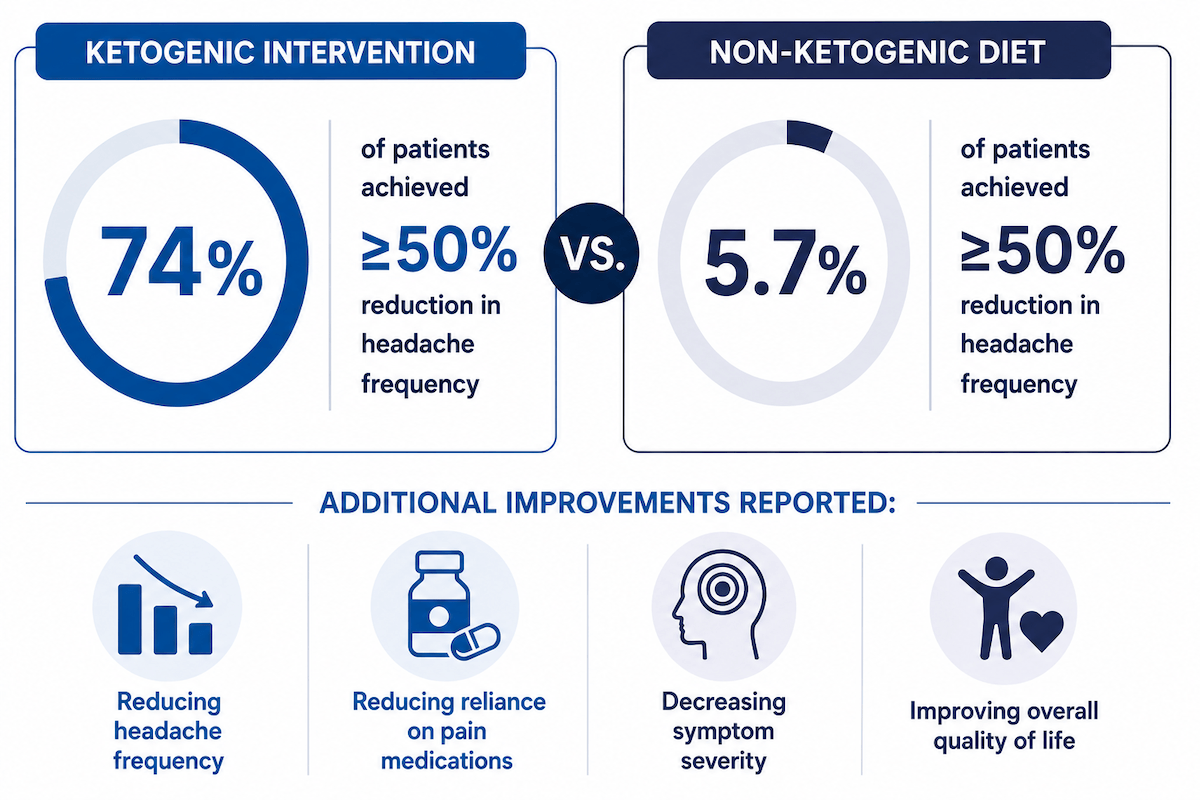
In one study comparing a ketogenic intervention to a non-ketogenic diet:
74% of patients following the ketogenic intervention achieved at least a 50% reduction in headache frequency
Only 5.7% of patients following the comparison diet experienced the same improvement
Other studies reported improvements in:
Headache frequency
Duration of attacks
Symptom severity
Medication use
There Is No “One Keto Diet”
One important point emphasized throughout the paper is that ketogenic metabolic therapy is not one-size-fits-all.
Different patients may require different strategies depending on symptoms, goals, weight, metabolic health, lifestyle, medications, food preferences, and long term sustainability.
This is very different from the “internet keto” approach many people picture.
Therapeutic ketogenic care should be individualized and medically appropriate.
One AKT client who had struggled with migraines for years described initially feeling overwhelmed trying to figure out a ketogenic diet on her own. After working with the AKT team to create an individualized approach that fit her lifestyle, health history, and food preferences, she shared that she “no longer had to give up days of my life to pain and seclusion caused by the incapacitation of migraines.”
What Do the Clinical Recommendations Actually Recommend?
One of the most valuable aspects of the paper is that it goes beyond the science and provides practical guidance on who may benefit and how the diet can be implemented clinically.
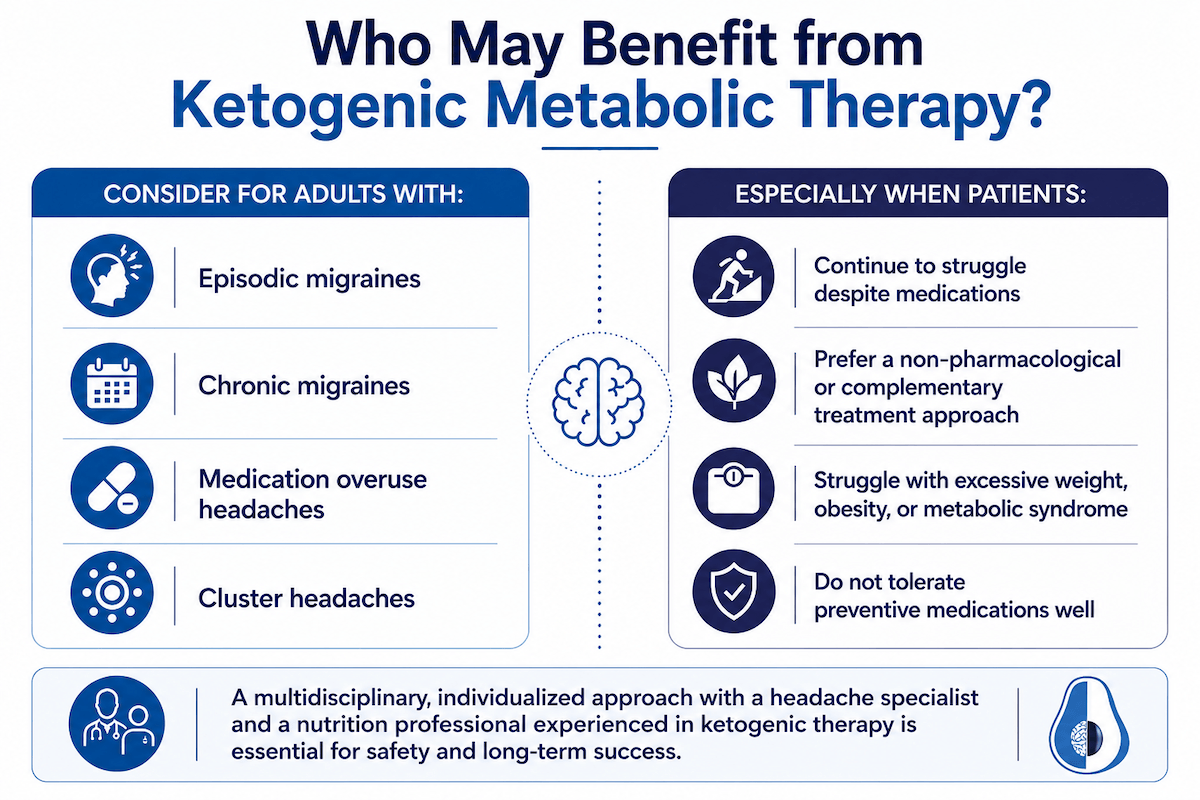
The expert panel recommends considering ketogenic metabolic therapy for adults with:
Episodic migraines
Chronic migraines
Medication overuse headaches (MOH)
Cluster headaches
The recommendations specifically highlight patients who:
Continue to struggle despite medications
Do not tolerate preventive medications well
Have contraindications to certain medications
Struggle with excessive weight, obesity, or metabolic syndrome
Prefer a non-pharmacological or complementary treatment approach
The clinical recommendations strongly emphasize a multidisciplinary approach. The expert panel recommends that patients first undergo evaluation by a headache specialist and then work closely with a nutrition professional experienced in ketogenic therapies to determine:
Whether the diet is appropriate
Which ketogenic approach may fit best
How to safely implement the therapy
How to improve long-term sustainability and adherence
Another important takeaway from the paper is that ketogenic metabolic therapy should fit into a person’s life. Not completely take over it. The panel specifically discusses tailoring the dietary approach to patient preferences in order to improve sustainability and reduce disruption to work, home life, and quality of life.
The clinical recommendations note that side effects were relatively uncommon when patients were appropriately monitored and guided by experienced clinicians. When side effects did occur, they were often manageable with hydration, electrolyte adjustments, supplementation, or modifications to the dietary approach. The recommendations also emphasize that ketogenic metabolic therapy should be individualized and adjusted over time based on symptoms, goals, tolerance, and long-term sustainability.
Overall, the paper outlines realistic treatment goals focused on meaningful clinical improvement, including:
Reducing headache frequency
Reducing reliance on pain medications
Potentially reducing preventive medication burden
Improving overall quality of life
Nutrition Is Often Overlooked in Headache and Migraine Care
For many patients, nutrition conversations around headaches stop at avoiding trigger foods or drinking more water.
But therapeutic nutrition goes far beyond trigger foods.
Nutritional interventions may influence:
Brain fuel utilization
Inflammation
Hormonal signaling
Blood sugar stability
Neurotransmitter balance
And for some patients, those shifts may significantly improve quality of life.
Final Thoughts
Headaches and migraines are complex neurological conditions that require more than a one-size-fits-all treatment approach. The growing research around ketogenic metabolic therapy is helping expand the conversation around brain metabolism, inflammation, and the role nutrition may play in neurological health.
At Advanced Ketogenic Therapies, we believe patients deserve individualized, evidence-informed care that explores all therapeutic options and supports long-term quality of life.
Download our free “Ketogenic Metabolic Therapy: Migraines & Headaches" fact sheet for a quick overview of the research, potential benefits, and key considerations for patients and healthcare professionals.
Reference: Di Lorenzo, Cherubino, et al. “Applications of Ketogenic Diets in Patients with Headache: Clinical Recommendations.” Nutrients, vol. 13, no. 7, 2021, p. 2307. https://doi.org/10.3390/nu13072307
